

ELGIN – Learning facts about one’s hometown can be difficult depending on the resources provided and any documents that may still exist.
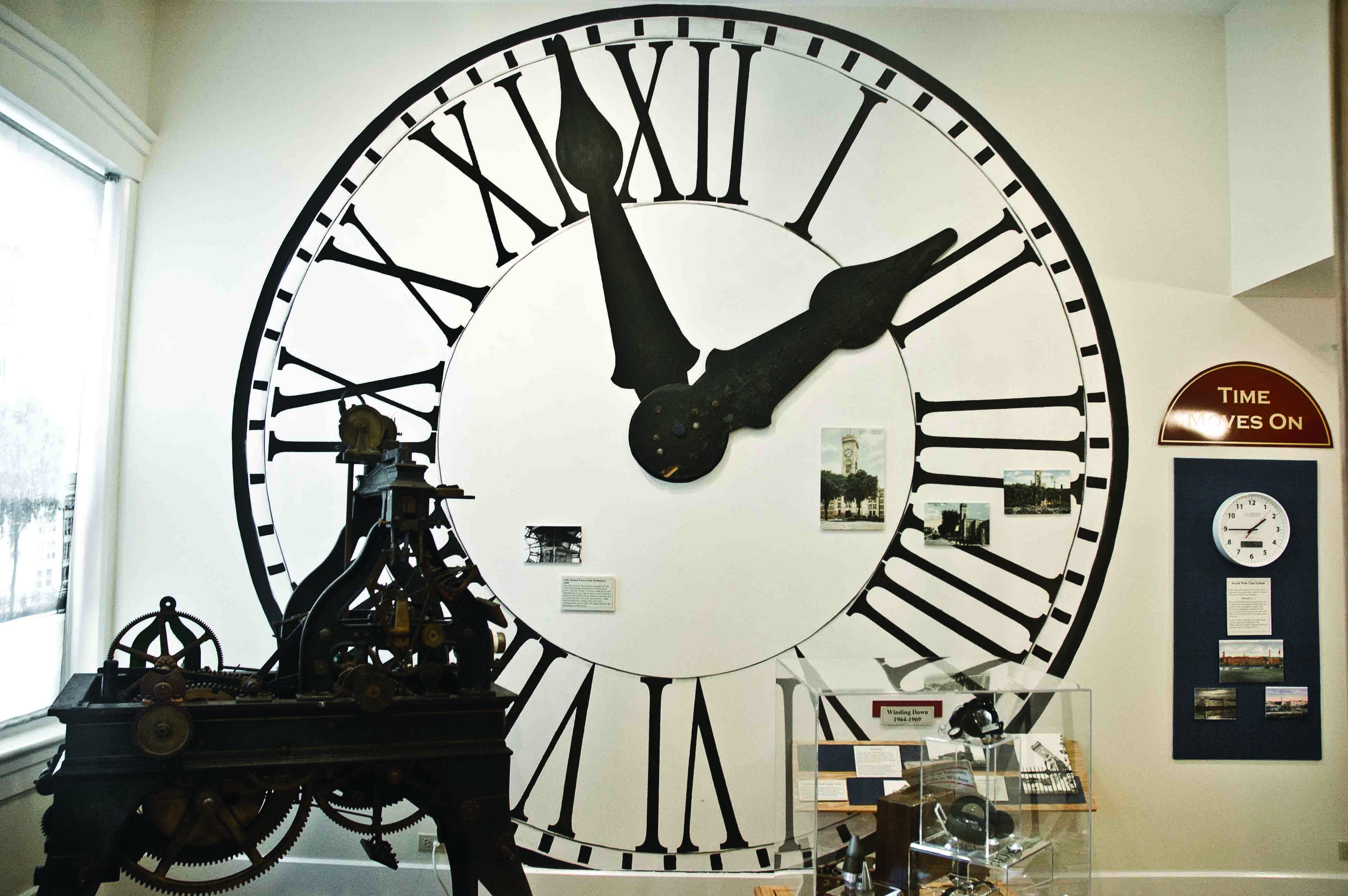
The exhibit on Elgin’s history with timepieces is the most popular feature of the Elgin Area
Historical Society. The city is famous for the Elgin National Watch Company. Once a major
national producer of watches, the factory closed in 1968. (Chris La Pelusa/Sun Day Photo)
In Elgin, however, residents can learn about their city’s rich history, all the way back to 1835, thanks in part to the Elgin Area Historical Society and Museum.
A little history about the society: the first historical society existed with Elgin’s first settlers, their kids and grandkids, who would mostly meet up from time to time and share stories from the 19th century through the early 30’s, when the group went defunct. In the 60’s, a new group was born, but locations for the meetings would change due to the group’s lack of an official meeting place.
Enter Elgin’s Old Main building. The then-rundown structure was in a state of disrepair, placed on the chopping block for potential demolition. Preservation efforts were attempted, and shortly after the U.S. Bicentennial, the historical society and the city were able to save the building. Their task then was to rehab the building to “create a place where you could learn about Elgin’s history,” according to Elizabeth Marston, director of the current Elgin Area Historical Society and Museum.
“The rehab itself was an enormous effort,” she says. “Since the society was all volunteer-run at the time and had a budget of about $5,000 to $10,000 a year, an additional $500,000 had to be raised to get the building up to today’s standards. So we did it piece by piece. The first floor was opened in 1987, the second floor in 1990, and the third floor in 1993. It was a long, long, long process and a lot of arm-twisting to get people to do stuff for the cheap or for free.”
Located at 360 Park Street in Elgin, the museum stands three stories high and is packed with information about various events, companies, and societies that have taken place in or have inhabited the city in the past 178 years.
The chronological exhibit is newer to the museum, having opened last year, but Marston said when the building first opened in 1987, each room was a different theme. “We had an art room, a watch company room … different exhibits that stood alone. But we had to keep changing the exhibits—we still do, because if we don’t change it, no one will come back.”
When Marston started in 1999, there were five major themes: Early Elgin, the Elgin Watch Company, the Elgin Road Races, Elgin architecture, and Hiawatha. She said the chronological exhibit allows the museum to expand, adding pieces of history that would otherwise not fit in the earlier named exhibits.
“It allows us to tell a lot of little stories about Elgin’s history and stick them into the timeline, like the Civil War, the hospitals we have in town. They just didn’t fit into those themes,” she said.
While permanent exhibits take up a majority of the space on the museum walls, Marston adds that there have been a couple of rotating exhibits that pass through. For instance, one of their latest exhibits covered the 100th anniversary of the Girl Scouts. That exhibit was recently taken down to make way for their new exhibit, celebrating the 125th anniversary of Presence Saint Joseph Hospital.
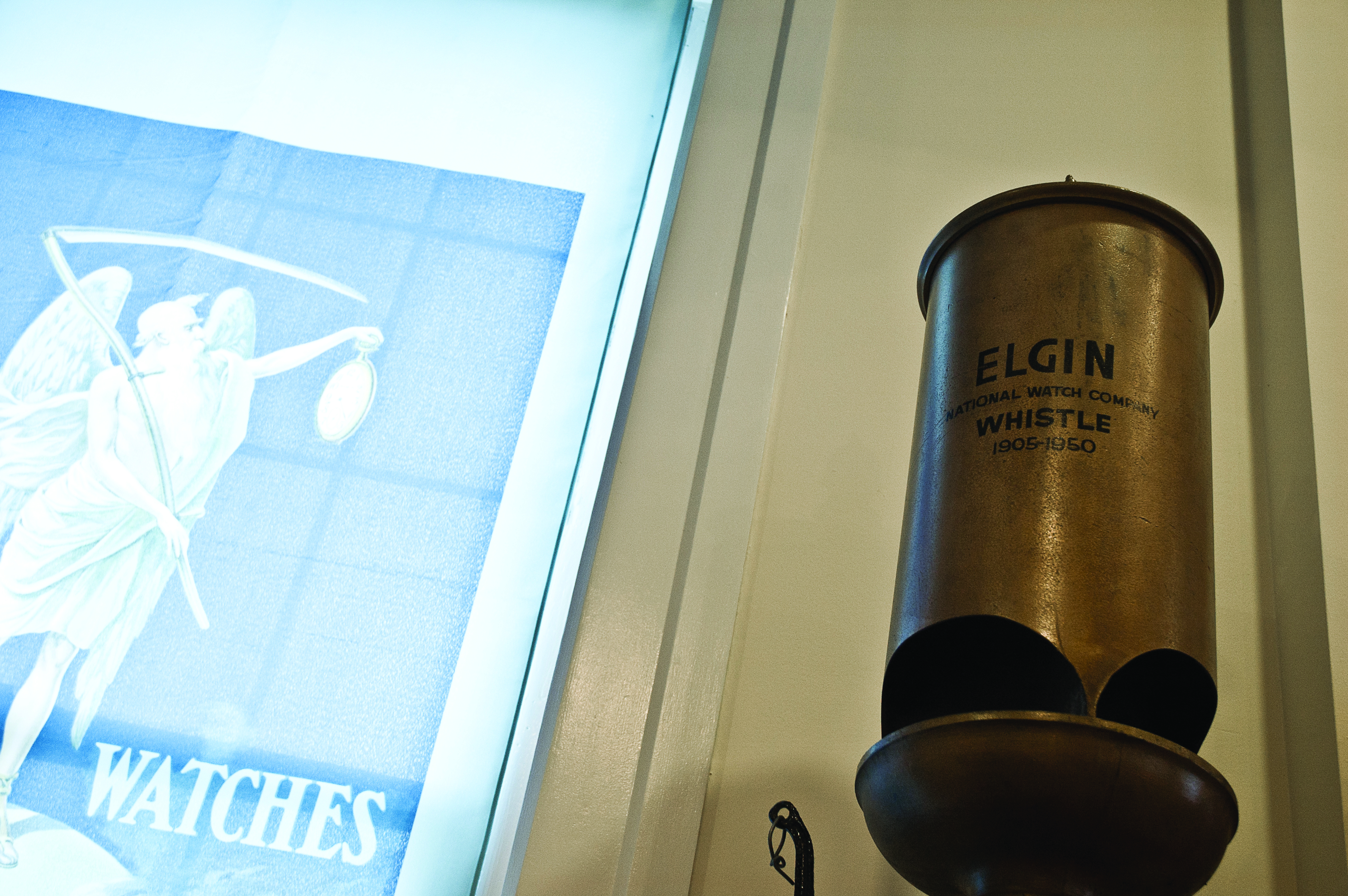
A whistle used in the factory of the Elgin National Watch Company is featured at the Elgin Area Historical Museum. (Chris La Pelusa/Sun Day Photo)
She’s also looking for new things to incorporate into the museum and encourages anyone with an interesting item (that can be related to Elgin) to stop by or recommend it. “I’m always open to suggestions. A lot of times we’ll get someone who has an idea or someone who has something that they want to preserve that’s been in their family for generations. It’s really interesting to see what’s going on.”
Any museum attendees may also notice that the chronological exhibit doesn’t feature anything past the 1970’s, a choice Marston had to make when assembling the exhibit.
“It’s hard to collect for things that have happened in the past 30 years. Because what is history, really? I view it as at least 50 years or older. It’s hard to look at something now and determine if it will be memorable in 20 years. Just because it’s memorable now doesn’t mean it will stand the test of time,” she said.
The museum is still run entirely on the service of volunteers, and Marston adds they are always looking for new people to join the ranks. She requests that people give at least one afternoon a month to the museum, but they can always get involved more on committees or projects the society may take on or create. One of those projects is the rehabilitation of an old windmill. Volunteer information can be found at the museum’s website, elginhistory.org
Elgin Area Historical Society
The museum operates from noon to 4 p.m. Wednesdays through Saturdays and costs $3 for adults, $1 for students, and is free for historical society members.
For more information about the Elgin Area Historical
Museum and Historical
Society, visit elginhistory.org/