

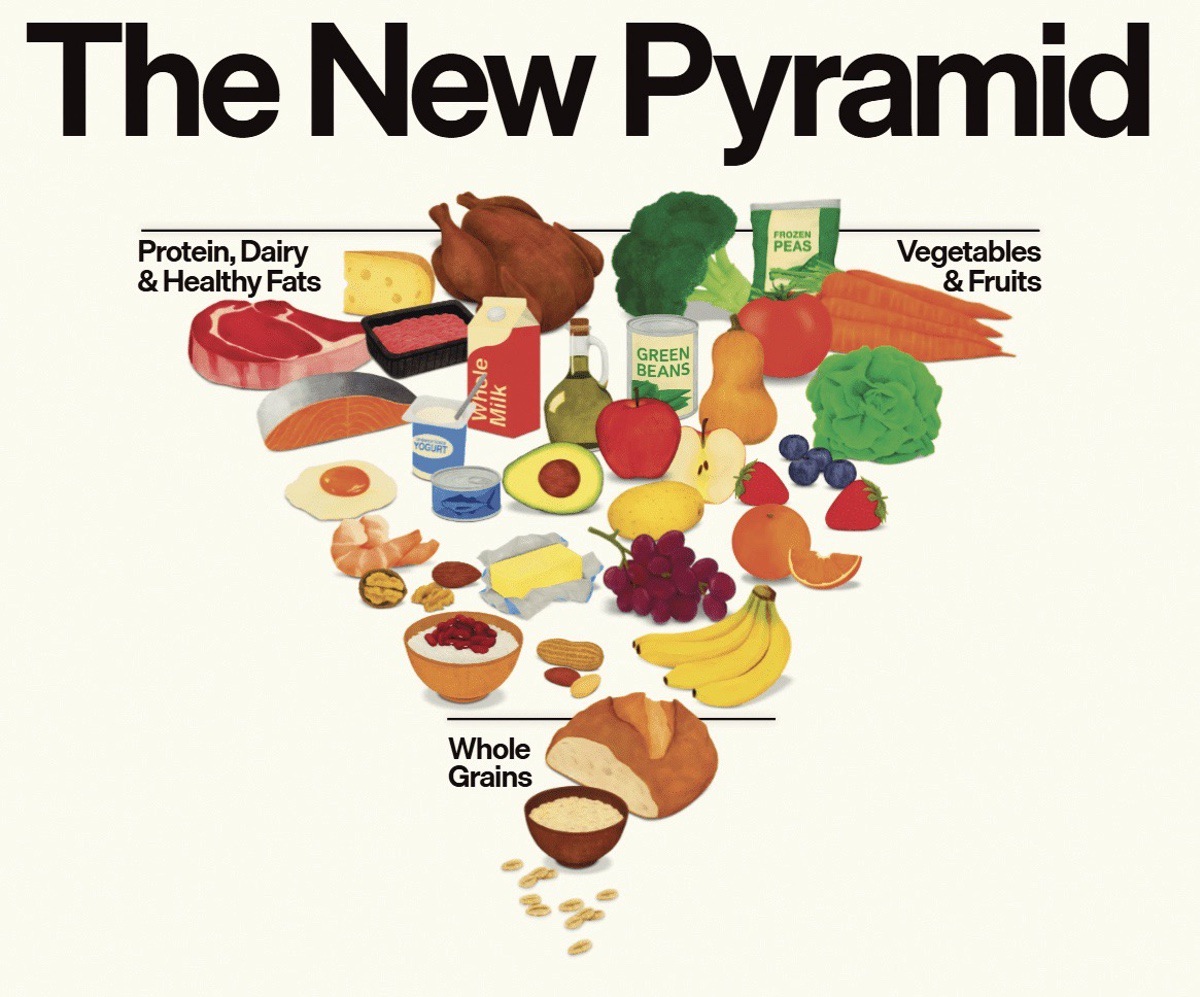
Last month the February Health Report focused on the new 2025-2030 Food Guidelines. Both positives and negatives were reviewed, with the biggest concern voiced by nutritional experts that the new Dietary Food Guidelines for Americans (DGA) were being shaped by agricultural and food industry ties. Potential bias, resulting in overemphasis on meat and animal protein and new recommendations for increased meat, protein, and saturated fat intake.
An article by Harvard “Understanding the new dietary guidelines” provided insights by Dr. Teresa Fung, former member of the DGA Advisory Committee. This scientific panel spent two years reviewing the latest nutrition research in preparation for developing the 2025-2030 Guidelines. The present Dietary Guidelines Committee did not include/review this scientific report when creating this year’s Food Guidelines.
What’s changed and what hasn’t?
The new Guidelines still focus on past, almost universally advocated recommendations: more fruits and vegetables, whole grains, less sugar, and fewer ultra-processed foods, but they also deviated significantly. Dr. Fung pointed out the 3 biggest deviations from former guidelines were
1. A new prioritization of animal food sources, especially meat and dairy.
2. More protein, even at every meal
3. More saturated fat in the diet
Many nutritional experts question these changes
While meat and dairy are part of the typical American diet, many health organizations and physician groups cautioned that over-emphasizing meat consumption can cut out other needed foods or leave no room for nutrient dense, fiber-filled plant proteins.
Meat and dairy also come with cholesterol and fat as well as serious disease risks: According to the International Agency for Research, Processed meat is a Group 4 carcinogen, the highest rating, and red meat is a probable carcinogen-Group 1.
The need for increased protein has also been questioned. Many nutritional experts pointed out that while slightly more protein may be needed for the elderly, those recovering from an injury or surgery, pregnant or nursing mothers, and those participating in demanding endurance sports, most Americans are receiving adequate protein, often already consuming more than the 50 to 100 percent increase the new Guidelines recommend.
Top Tufts nutrition expert Dr. Darish Mazaffarian, in a recent journal article of the American Medical Association, cautioned that “excess protein can be converted to fat by the liver which can increase the risk of the development of dangerous fat in the abdomen…and boost the risk of diabetes.” While the new DGAs did mention plant proteins (beans, peas, and lentils), meat was recommended first and plant protein last.
Finally, doctors and dietitians expressed concern over recommendations for saturated fat. The Health Organizations’ Recommendations on Saturated Fat (2025) compiles current guidance from a veritable “who’s who” of authoritative health organizations, including the American Heart Association (AHA), World Health Organization (WHO), American College of Cardiology, Academy of Nutrition and Dietetics, American Diabetes Association, American Cancer Society, and American Medical Association, among others.
These recent recommendations and this Dec. 25 study were not supportive of increased saturated fat intake. The later study published in the Annals of Internal Medicine reviewed 17 randomized trials analyzing the impact of saturated fat on cardiovascular health in over 66,000 people and concluded that reducing saturated fat intake was linked to a lower risk of dying from any cause during the five-year study period, and a possible lower
risk of heart attack, stroke, and dying from cardiovascular disease.
Confusion between the new Dietary Guidelines and the Inverted Food Pyramid
Finally, The Guidelines themselves can be confusing. For example, meat and dairy products, especially full-fat diary, are significant sources of saturated fat, which the new Guidelines state “should be no more than 10 % of calories consumed.” Yet the Guidelines promote meat and dairy as “real foods,” sending a confusing message to the public. With the high emphasis on meat, direct mention of butter and beef tallow, and emphasis on full-fat dairy, it would be difficult to stick to the new DGAs’ 10 percent limit.
Likewise, while the Guidelines support whole grain consumption, whole grains are placed at the bottom of the Food Pyramid, indicating they miss top billing, although a raw steak, a hunk of cheese, a pan of ground beef and a carton of milk all prominently appear on the top left.
While the revised visual mode of an inverted pyramid is eye-catching, it can be confusing. In the traditional pyramid less-recommended foods were minimalized at the top, while the new Food Pyramid places some strongly recommended foods like whole grains in the smallest lowest level, seemingly reflecting a minimal health role.
Two important final points
The arrival of this controversial 2025-2030 Food Guidelines is important because they form the basis for government-funded food and nutrition programs such as the School Lunch, Military nutrition, and SNAP programs.
Readers’ response to these Guidelines
Reading and perhaps further researching these guidelines and the accompanying inverted Food Pyramid may be prudent. Influencers and clever marketing strategies will soon be bombarding Americans with ads promoting increased meat, protein and saturated fat consumption.
Many dietitians and physicians will encourage you to stick with the 2020 Food Guidelines focusing on whole grains, fruits and vegetables, limiting fat, especially saturated fat and minimizing sugar and ultra-processed foods.