Sixty years ago, my WIU creative writing professor made a comment that proved to be prophetic, both then and now in a flipped-on-its-head kind of way. And although he directed his comment to the female students, it struck home with me.
He said: “If you’re a woman author submitting a manuscript for publication, use your initials instead of your first name, because the publishing industry is heavily tilted toward men. If publishers don’t know your gender, they can’t start judging until they read what you’ve written.”
Hm-m-m, I thought. That sounds like good advice for any writer, man or woman. It worked pretty well for T.S. Eliot, J. R. R. Tolkien, and ee cummings, right?
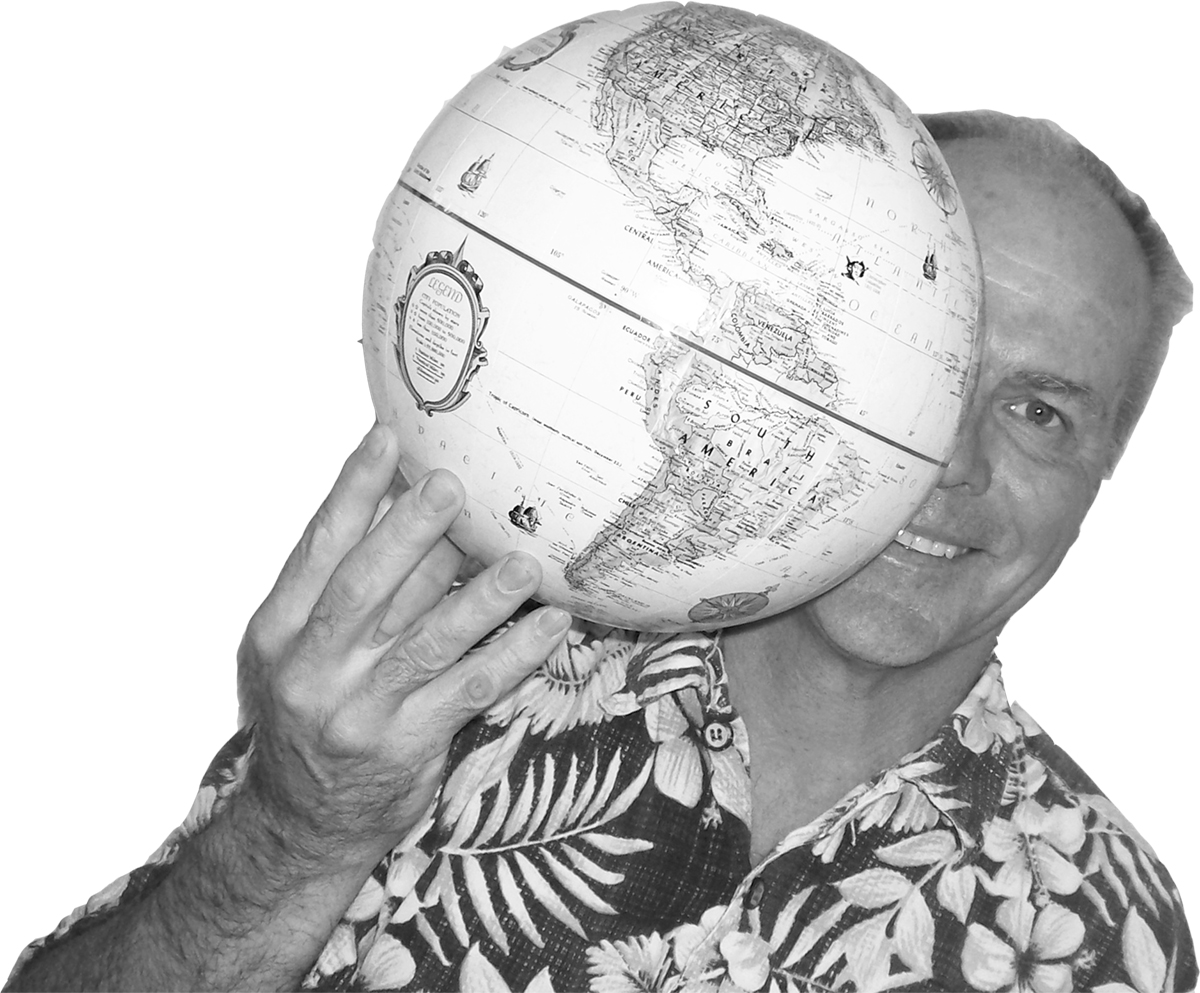
I’ve been TR Kerth ever since — not that it has helped me to get my Great American Novel published.
Still, it seemed like a good insight for a writing teacher to share with his budding writer pupils, because he was right. The publishing industry at the time had a heavy testosterone tilt.
After all, consider the modern classics of literature being published at the time: “Catch-22,” “Slaughterhouse Five,” “Catcher in the Rye”.
All written by men.
I could go on. “A Clockwork Orange,” “In Cold Blood,” “The Godfather.” And many, many more — virtually all the top selling money-makers of the time, all written by men. About men.
And, perhaps not surprisingly, all popular among avid readers who were also men.
They were great books. It was a great time for American literature.
Fast-forward sixty years or so and check out the best-seller list today. I did, and here’s what I found:
Looking for a light, entertaining, plot-driven novel, I Googled “Best beach reads, 2026.” Of the first ten books listed, nine were written by women.
So were all of the next ten.
I didn’t look any further than that. Ninety-five percent is enough to convince me that there’s a trend going on.
So, OK, the pro-progesterone bias is undeniable when it comes to escapist beach reads, many of which are probably romance novels. But what about more serious fiction?
To find out, next I Googled the New York Times “Best Books of the 21st Century” and that balanced things — but only a bit. Because now only six of the top ten books listed were written by women.
I’ve read some of the books on that list, like “Tomorrow, and Tomorrow, and Tomorrow” by Gabrielle Zevin, and while they were quite good, were any of them on the same literary level as those classics from 60 years ago?
I guess the jury is still out, isn’t it? Ask us in 60 years how we all feel about it. But for me, for now, I’m feeling a resounding “Meh” to most of my recent readings.
I’m not blaming the publishing industry. I suppose it makes sense that women now dominate the top-selling novels list, because women are pretty much the only ones buying novels these days. According to the National Endowment for the Arts, slightly more than 50 percent of American women are readers of novels, but when it comes to men, that number drops to 27 percent, and falling.
What’s not clear is which way that chicken-and-egg argument moves. Are published writers today mostly women because men have abandoned reading and writing and moved on to other things? Or have men stopped reading and writing because women have somehow crowded them out of the market and now modern fiction is only told from a female perspective that doesn’t speak to them?
For that matter, since you asked (and you know the question was in your mind), what’s my point in even writing this? Am I just crying over my lost literary “Write Male Privilege”?
For the record, I am one of those abnormal 27 percent of men who still read novels. A lot of novels. Maybe two books a week—probably close to a hundred a year.
And also, for the record, reading and enjoying a novel penned by a woman has never scared me off. I wrote my master’s thesis on Flannery O’Connor, a female Southern novelist. Among the books I read (or re-read) last month were “Jane Eyre” and “Wuthering Heights,” both written by and about women. Classics all, and rightly so.
But I must admit that a lot of “best” novels of the past decade or so have left me less than satisfied — and maybe because their perspective was too overtly female-slanted.
“Hamnet” is one example.
So too with “The Frozen River.”
If you have read them, I’ll bet you’re a woman (I wouldn’t bet against the 50 vs. 27 percent odds). And I’ll bet you loved them because, yeah, they’re pretty good books.
But when you read them, did you hear how overtly “female” those novel voices sounded? Not just because the protagonist is a woman. And not in a refreshing “glad to finally be in the club” kind of way, but in a bitter “revenge is sweet” kind of way — as if they were not just written by and about women, but written exclusively FOR women. With every male character drawn in a weak, shallow, or hollow way, no more than incidental cardboard cutouts.
Anyway, they sounded that way to me, and I don’t think it’s just because my literary “Write Male Privilege” card has been revoked.
So if I were a college writing professor today, I think I’d offer this advice: “Whatever initials you use, make sure all your characters—male and female, old and young, black and white—are so fleshed out and complete that your reader has no clue which way the author is fleshed out.”
Imagine how great the literature of the past sixty years would have been if every author had heeded that advice.
TR Kerth is the author of “The revenge of the sardines.” Contact him at trkerth@yahoo.com.