

A good film doesn’t require a good protagonist. There is no obligation to the audience from any screenwriter that the character we follow throughout the feature be as flawless as Teflon, no moral ambiguity whatsoever. The Hays Code has been long gone now and we are adults that can discern right from wrong. The only sin of the filmmaker is to make characters that are boring.
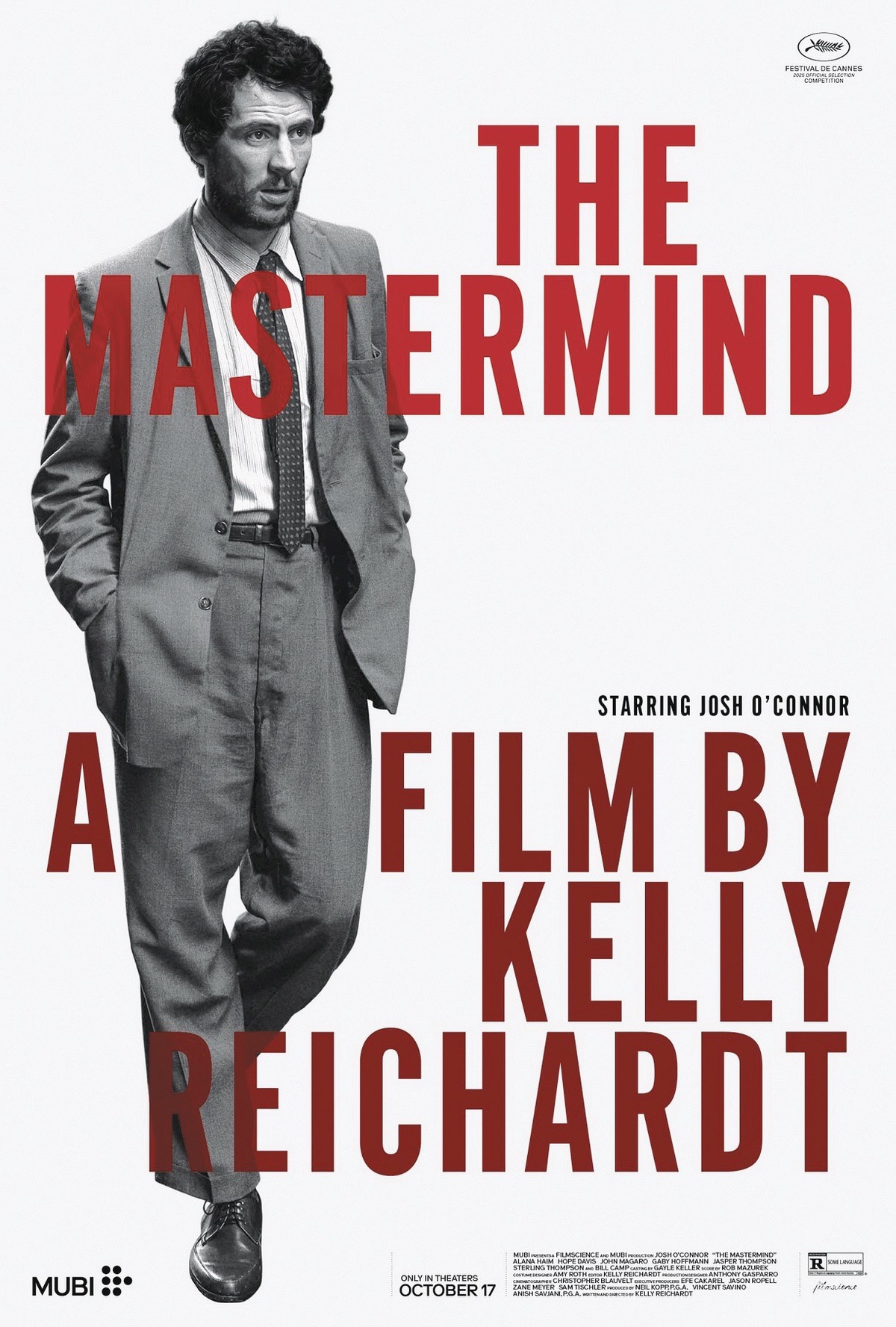
Filmmaker Kelly Reichardt would never be described as maximalist. Her dramas are quiet fly-on-the-wall observations of very grounded human beings. This is why the idea of creating a heist film felt so strange a genre for her to tackle. The Mastermind plays like a lost heir apparent to the works of Hal Ashby and Monte Hellman, a film that not only takes place in the 70s but beamed to us from that decade. Here we meet James Blaine Mooney (Josh O’Connor), a failure in the truest sense of the word. He is the son of a judge and comes from wealth; went to school for architecture and can build furniture. However, he is jobless not because of outside forces but his lack of ambition.
When we meet him, he has concocted a scheme to lift a handful of paintings from a local museum. Fitting that this film has been released just as the Louvre has had its jewels jacked. His plan isn’t entirely clear from the outset. Financial gain seems to be the motive, but that becomes muddied as the film goes on. But like all great pieces of Murphy’s law, the execution never lives up to Mooney’s initial proposal. In a moment of desperation, he is forced to go on the lamb for the second half of the film.
O’Connor can’t help but be engaging, no matter how much of a cad his characters are. He is the enigma at the center of this movie, a man who takes every wrong move but we follow him anyways. Even when he is placating his wife or pleading for a loan from his mother, his innocent demeanor demands our attention. This all culminates in an ending which reminded me of Five Easy Pieces; life is never tied up with cute bows.
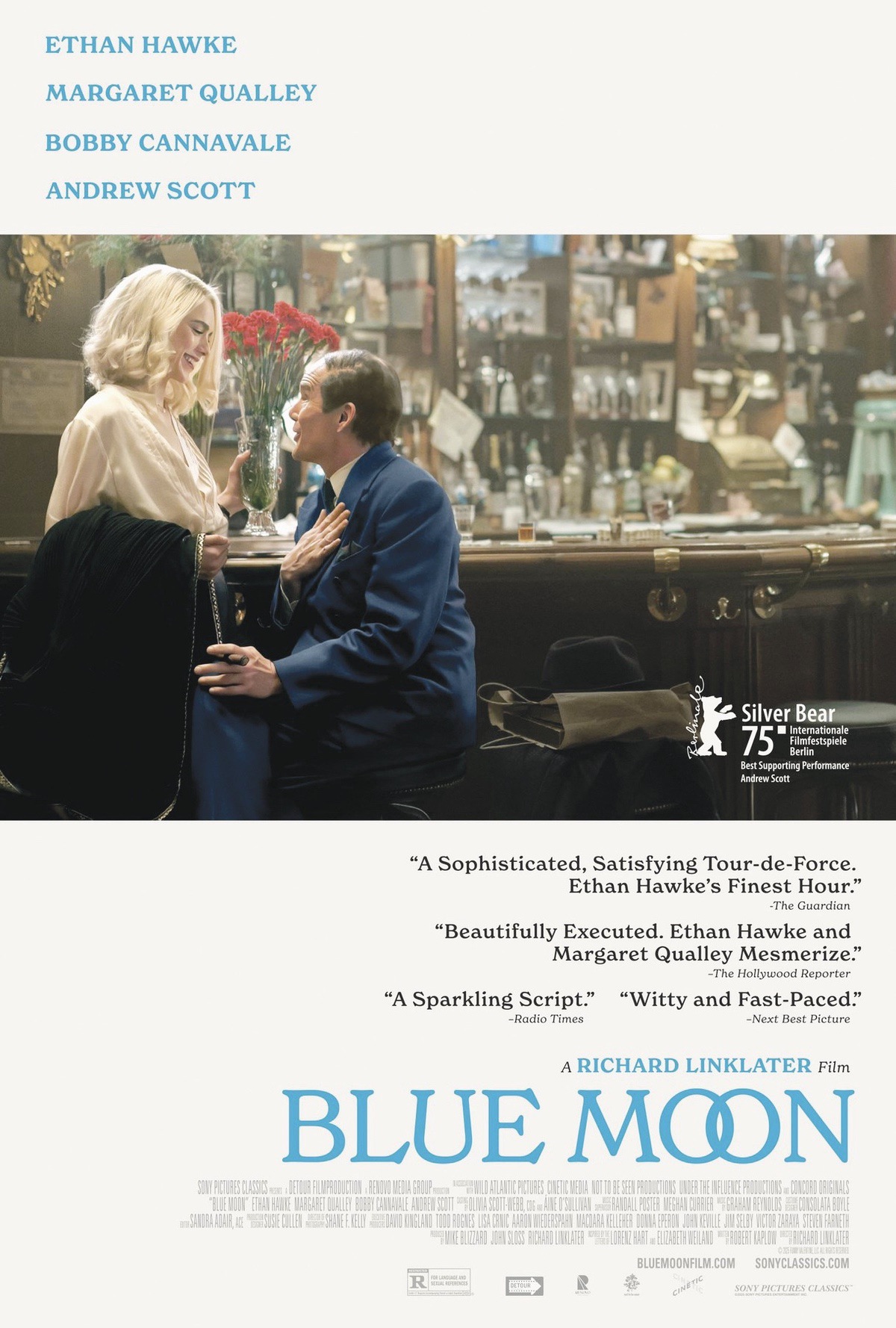
In the same vein, Richard Linklater’s films have always been a bit didactic with their views of deeply flawed individuals. Blue Moon takes us back to the 40s, the start of the golden age of Broadway. On the opening night of Oklahoma!, he introduces us to Lorenz Hart. This premiere night signals the beginning of the blockbuster partnership of Richard Rodgers and Oscar Hammerstein III, leaving Hart in the dust. After writing some of the best music (“My Funny Valentine,” “The Lady is A Tramp,” “Bewitched, Bothered, and Bewildered,” just to name a few), it would seem that Lorenz has to convince Rodgers that they still have their best work ahead of them together. The opening doesn’t sugarcoat it for us. Battling alcoholism and a failing career, Hart has one night to secure what’s left.
Ethan Hawke has always been an amazing performer. But I don’t think I have ever seen a more compelling role for him than Lorenz. He is mesmerizing, not just for the physical transformation but for sheer strength of his ability to have us hang on his every word. His Hart is a man who is so afraid to lose our attention that he will never stop talking our ear off, charm his way into our good graces as well as those around him. But ultimately, he can’t help but put his foot firmly on that silver tongue of his.
The rest of the cast is spectacular. Hawke’s banter with Bobby Cannavale’s bartender and the rest of the patrons makes this movie. His chemistry is felt with everyone from Margaret Qualley’s aspiring set designer Liz Weiland to his former partner played with ease by Andrew Scott. There is not an ounce of fat in the production; nothing to waste your time. Like any great tune, it knows how to keep the melody simple but the lyrics sharp. That’s all you can ask for.