
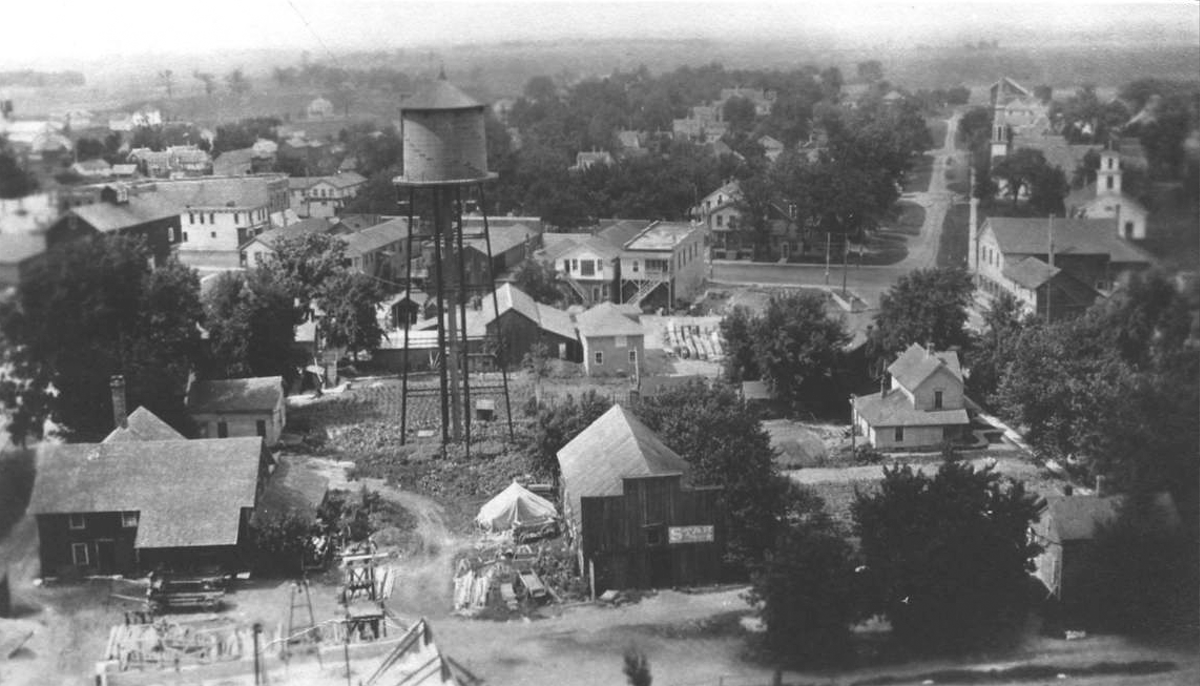
Marking a 175th anniversary, otherwise known as a demisemiseptcentennial, is akin to celebrating a half birthday, creating an excuse for fanfare between the traditional milestones. So, as we look back at Huntley’s 175 years, along with traveling its well-known roads, let’s take a few side streets, and immerse in the town’s history, celebrity, mystery, and oddity, those things you find when you step off the beaten path.
The Groundbreakers
According to Lonni Oldham, lifelong Huntley resident and Huntley Historical Society board member, three factors set Huntley up for success.
“Rich soil, Thomas Stillwell Huntley, and the train coming through,” said Oldham.
When the Chicago and Galena Railroad took its inaugural run through the area on September 5, 1851, Thomas Huntley staked claim to the area’s lush farmlands next to the rail line, laying a path for future farmers to propel Huntley to the top of the dairy chain.
“Dairy carried us through,” said Oldham. “At the end of the 1800s, Huntley was known as the milk capital of the world because we produced the most pints of milk per day than anywhere on earth. That’s our legacy.”
Huntley eventually evolved away from its dairy roots and its 200 working farms.
“That is all mostly gone,” explained Nancy Bacheller, former head of the local history department at the Huntley Area Public Library (HAPL) and the author of Huntley (Images of America). “There are only two dairy farms left in the Huntley area. Instead of growing crops, they are growing houses and businesses now.”
A few original houses still stand, such as the one Thomas Huntley built in 1856.
“That’s been landmarked as an historical site by the Village of Huntley and McHenry County Historical Society,” said Bacheller, adding that a new marker will soon go up in front of the founder’s home. “People still live in it. They are very much preservationists, keeping the house as true to the original as they can.”
The Trailblazer
In sports . . . Huntley hit a home run when one of its own became the first woman to rise to V.P. for a major league baseball team. Born on a Huntley farm in 1892, Margaret Donahue initially declined the secretarial job offered by the then Chicago Cubs president, William Veeck, Sr., according to library archives. Ultimately, she took the job and the rest is sports history.
“What impressed me is that she started out as a clerk and worked her way up to a vice president position. That was just unheard of at that time,” said Oldham. “She was also the one who started season passes. She started it with the Cubs, and then just about every other franchise did the same thing.”
Donahue is included in The Book of Women’s Firsts: Breakthrough Achievements of Almost 1,000 American Women, and had a Chicago park named after her.
“She was quite the standout,” added Oldham.
The Bestseller
Huntley has also been home to authors.
“Oliver Statler grew up in Huntley, and became interested in Japanese culture while in Japan in World War II,” said Bacheller. “He amassed a collection of Japanese woodblock art, and when he died, he willed it all to the Art Institute of Chicago.”
“He wrote a novel called Japanese Inn, that was on the New York Times bestseller list for weeks,” said Oldham. “And his dad was the doctor in town.” Oldham laughed. “He delivered most of us.”
Teddy Sighting
According to library archives, before he set his sights on the presidency, a young Theodore Roosevelt had a different target: birds.
“He was only 21 at that time,” said Bacheller, regarding the trip former president Roosevelt and his brother Elliott took in 1880 to hunt birds in Huntley. “They stayed at the Wilcox Farm. The house is still there. We have drawings of the farm.”
The proof?
“There’s a book called The Wilderness Warrior, by Douglas Brinkley, showing the letters that Roosevelt wrote to his sister. The letters were posted from Huntley. The dateline was from Huntley. After that, they moved on somewhere else.”
Mystery Guests
Three men from the infamous Titanic also had planned to come to Huntley, and Bacheller researched extensively, trying to track down their local connection.
“The book at the library has the names of all the passengers, where they were from, where they were headed. We have searched the census records and could find nothing about these three men who said they were going to Huntley, Illinois. They never showed up here,” said Bacheller. “It’s one of our history mysteries.”
Hometown Hero
“Back in the sixties, a biker gang decided they would terrorize a small community,” said Oldham. “Evidently, that was entertainment for biker gangs, to go around and give these small towns a hard time. So, they get downtown Huntley and were doing some disgusting things and going to various bars.”
Enter the hometown hero.
“We had a police chief who came, opened the trunk to the squad car, and pulled out a submachine gun,” said Oldham. “Then he walked into the bar and asked the gentlemen to leave. They threatened to come back a hundred strong — but they never did.”
Project Horizon
As housing developments overspread the area and Huntley’s population skyrocketed, the park district, like the town founders, had the foresight to preserve more land for the greater good.
“We acquired 153 acres in September of 2025 at the intersection of Smith Drive West and Kreutzer Road,” said Scott Crowe, Recreation Director for the Huntley Park District. “Next year we start construction on phase one: that’s two small soccer fields, a ninja course, and the community gardens.”
With a new referendum and more community input, the rest of the space could be developed for large events, such as the Village of Huntley fireworks, large sports fields, frisbee golf, or cricket pitches.
“There had been a few development proposals that would have put in 400 homes,” said Crowe. “Instead, that 153 acres is now preserved for recreational space. Huntley is a growing community. We at the park district are trying to think forward. Here’s where we’re at today, but where will we be based on our growth?”
What actually goes into that space the voters will decide down the road,” said Crowe. “But they can’t make that decision if we don’t have the space. So, acquiring the land was a big need.”
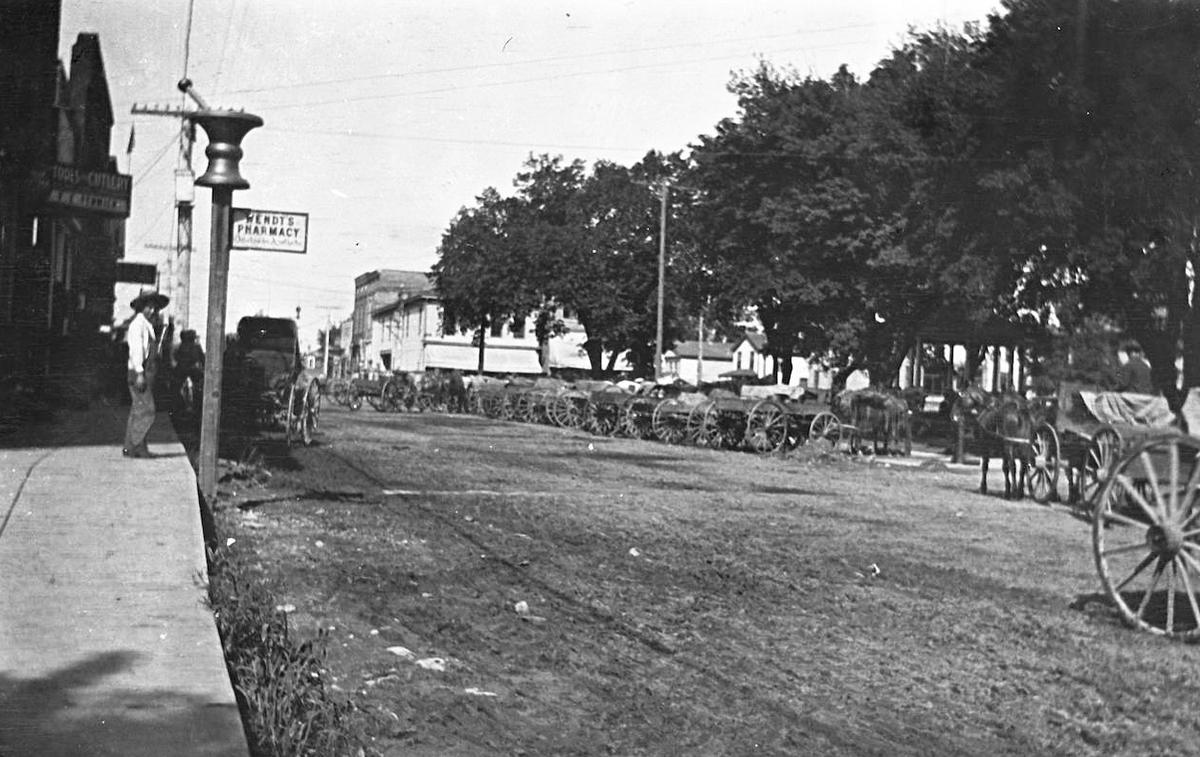
Town square
A dash of Huntley history
1834-2026, and everything in between
All photos courtesy of Huntley Area Public Library
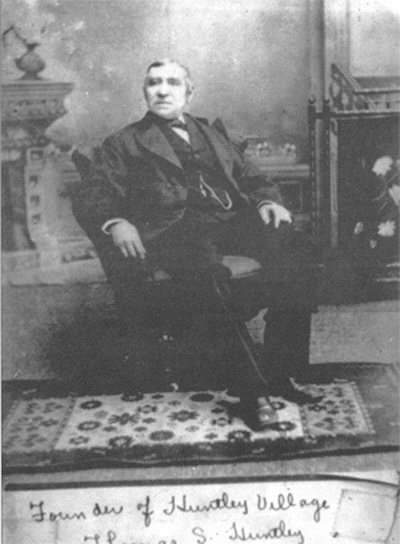
Thomas Stillwell Huntley
Huntley is known for its charming town square, its iconic gazebo, and its Dairy Mart cones. Now in its 175th year, Huntley has experienced meteoric growth, having come a long way from its dairy farm roots. As The Friendly Village with Country Charm celebrates its milestone with street banners, corn boils, and its 175 Collection merch, you might wonder, how did Huntley get where it is today? Take a look:
1834: The Prairie Band Potawatomi Nation tribe was exiled from the area following the Black Hawk Wars.
1838: Prescott Whittemore built Grafton Township’s first home.
1842: The first schoolhouse, a log cabin structure, opened on the west side of the future town.
1851: The Chicago and Galena Railroad built a rail line in what is now Huntley. Thomas Stillwell Huntley established the town of Huntley Station on 80 acres of land he purchased near the train line. He built the first commercial structure, and donated land for the train depot, town square, three churches, and a cemetery.
1856: Thomas Huntley built his home on Woodstock Street.
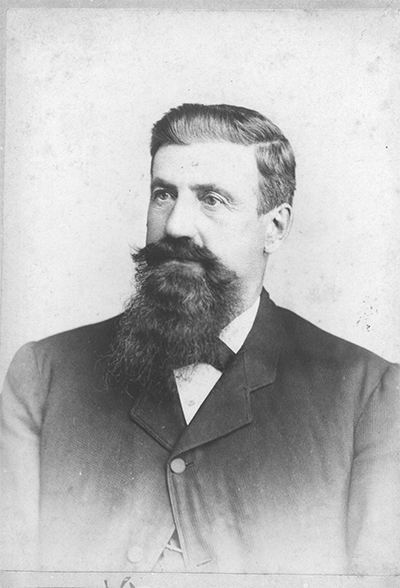
John S. Cummings
1863: The first telegraph became available in Huntley.
1867: The first milk processing plant opened on Haligus Road.
1868:John Kreutzer established his Huntley homestead farm.
1872: The Town of Huntley incorporated as a village government. John S. Cummings, veteran of the Civil War, became Huntley’s first mayor.
1880: A young Theodore Roosevelt came to Huntley to hunt birds. The Huntley Library and Literary Association was formed.
1890s: Huntley, known as The Milk Capital of the World, produced the most pounds of milk per day. The first local newspaper, Huntley News, was established.
1894: Thomas S. Huntley died at age 87.
1897: Telephone service became available in Huntley.
Early 1900s: The Huntley Journal newspaper began operations.
1905-1906: The town water system was established.
1906: Residents marched in protest against the ban on Sunday baseball.
1907: Borden’s opened its milk processing plant on Vine Street.
1908: The Drendel Farm was established by George and Mary Drendel.
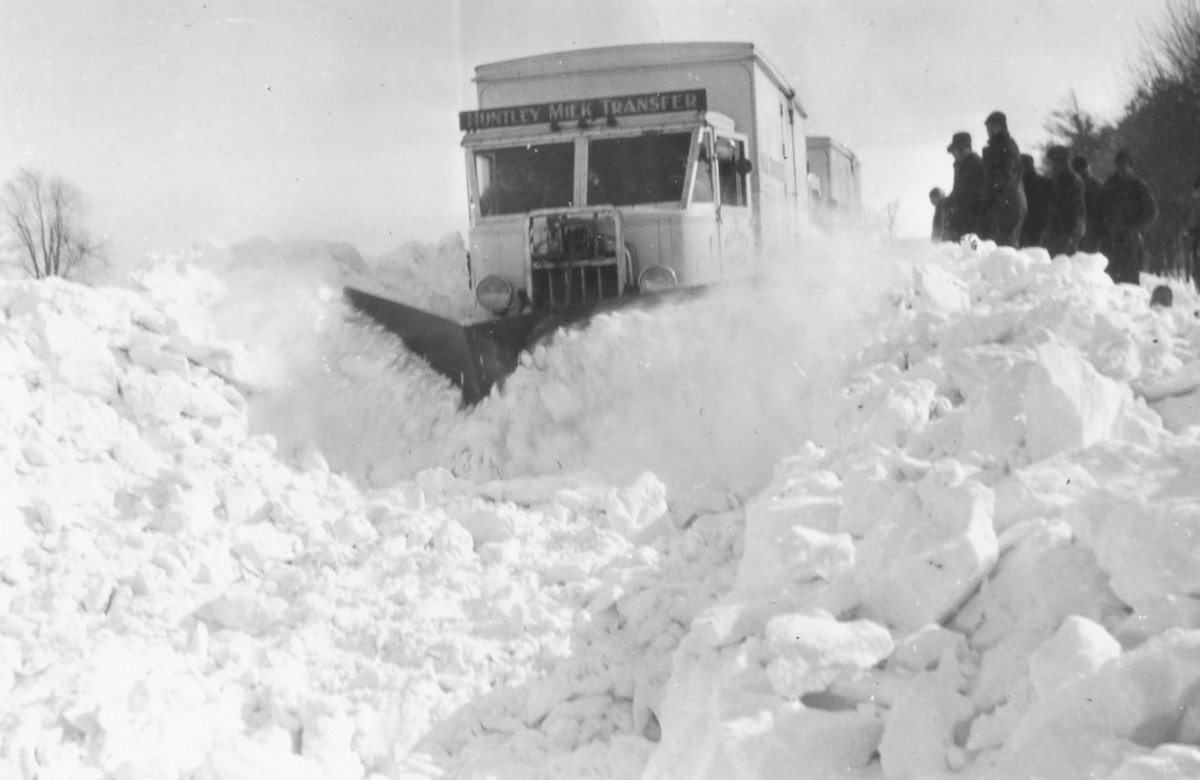
A milk transport
1913: The Victor Mey milk plant provided electricity to village residents until 9 p.m.
1914: Natural gas lines were installed.
1916: Huntley’s Lending Library was established.
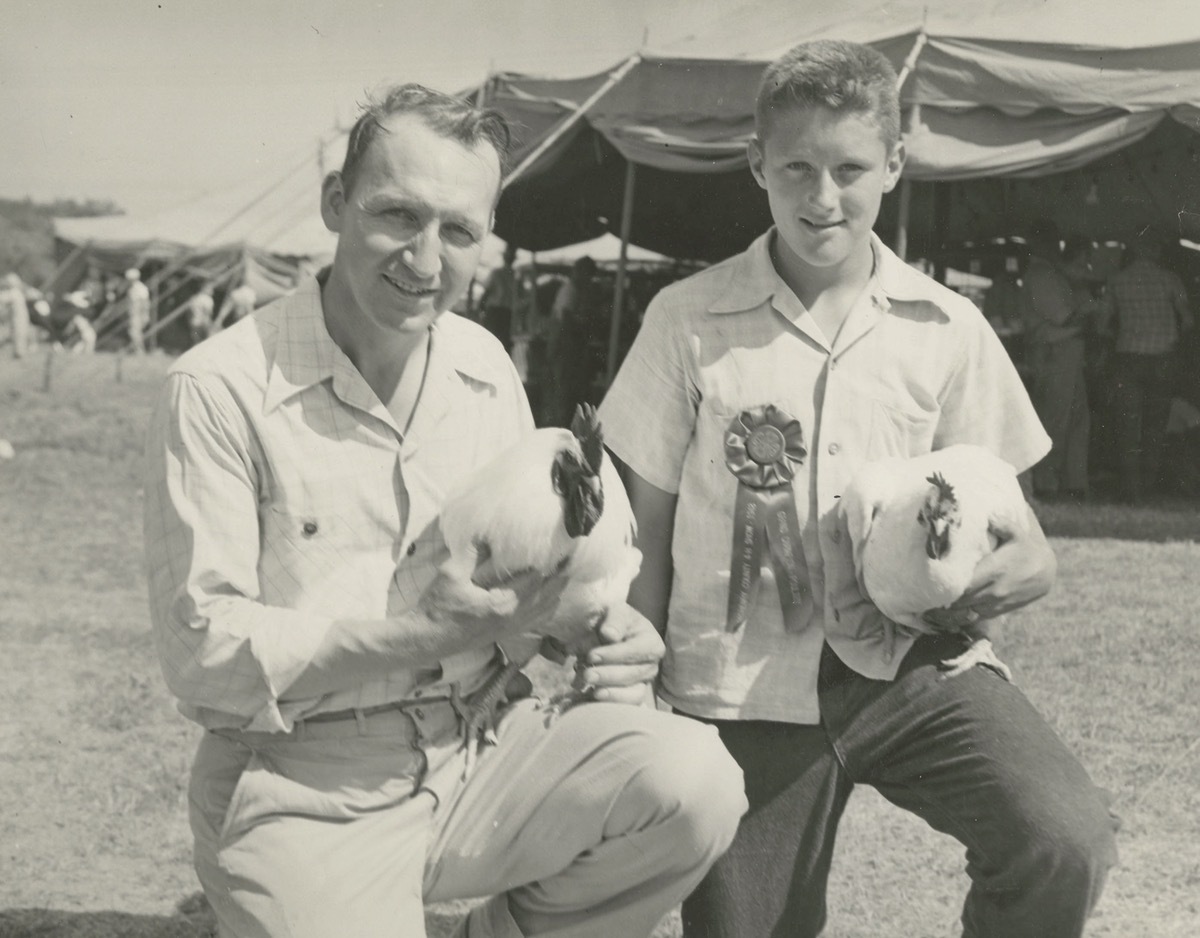
(L) Henry Marlowe
1920: The town and rural schools consolidated to form Huntley District 158. The first school bus provided transportation for rural students. Huntley Legion Post 673 was established.
1920s: The Boy Scout Cabin was built on what is now Deicke Park.
1922: The Huntley American Auxiliary was chartered.
1926: The Huntley Harvestors 4-H was chartered.
1934: The First Boy Scout Troop was chartered.
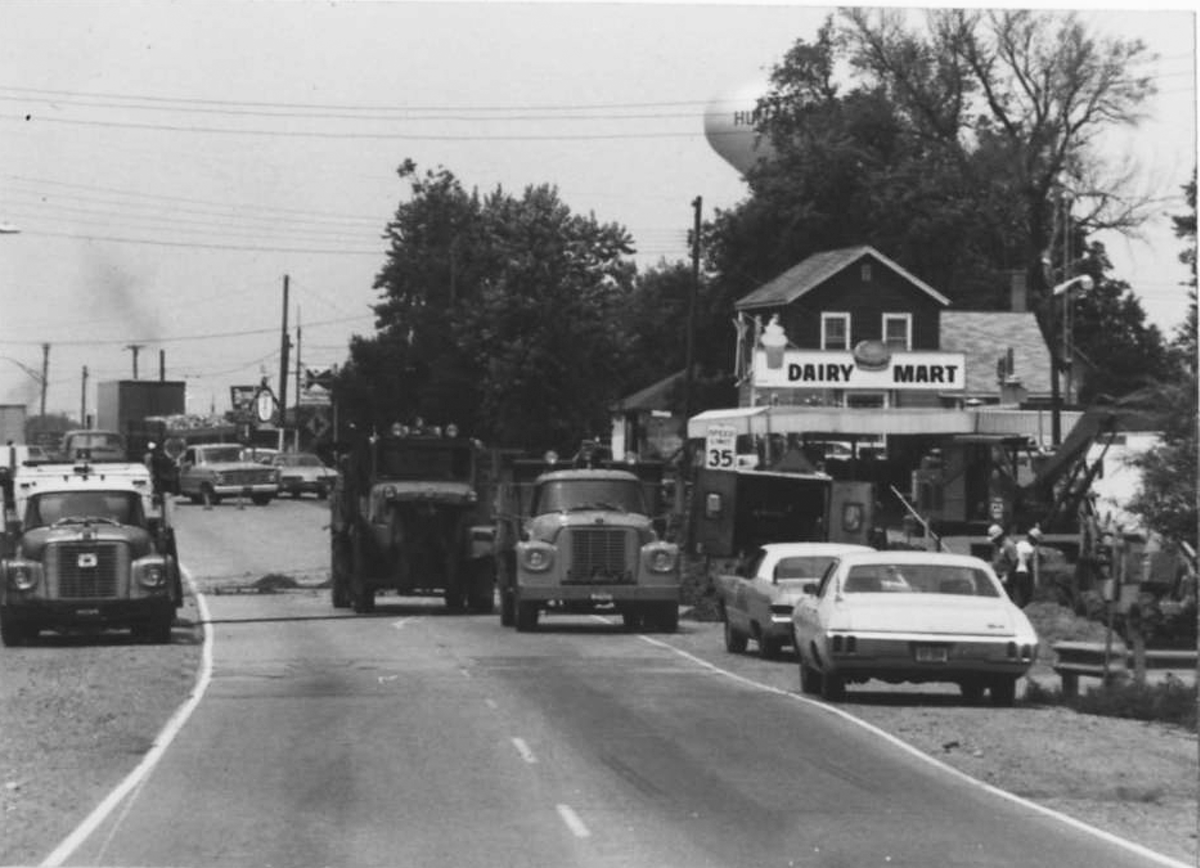
North on Rt. 47 and Dairy Mart
1936: Illinois Route 47 was extended north.
1939: The Philip Manning farm on Manning Road was the first to be electrified. The second village hall was opened at Coral and Church Streets.
1946: Dean’s dairy plant opened on Mill Street.
1950: The Huntley population was 830. A modern sewage disposal system was installed. Passenger train service through Huntley was discontinued.
1951: Huntley celebrated 100 years. Thomas Huntley III led the celebration parade. First Huntley Post Office was established.
1955: The Huntley Dairy Mart was opened.
1956: Bowl-Hi Lanes opened.
1961: Community members removed 101 trees destroyed by Dutch Elm disease. The novel Japanese Inn by hometown author Oliver H. Statler was on the New York Times Best Seller List for 16 weeks.
1963: Heinemann plane crash tragedy killed four men, including two Huntley residents: pilot Robert Heinemann, age 20, and his brother Rev. Harold Heinemann, age 27, after taking off from Crystal Lake Airport.
1965: Huntley Park District was formed.
1966: Edwin Deicke purchased and donated wooded land to the park district.
1970: The Powder Park fireworks plant explosion injured one employee and two volunteer firemen.
1972: The 26-acre Deicke Park was officially dedicated. The interchange at I-90 and Route 47 in Huntley allowed vehicles to travel to and from the east on the tollway. Pinecrest Golf Course opened.
1984: The first paid full-time fire chief was hired.
1985: A coin toss broke the mayoral election tie between Donald Enstrom and winner James Dhamer.
1989: The Huntley Area Public Library District was formed by referendum and the first library district building was opened on Algonquin Road.
1990: The population of Huntley was 2,453.
1994: Prime Outlet Mall at Route 47 and the Illinois Tollway was opened.
1998: Huntley High School opened on the Harmony Road campus. The first McDonalds opened across from Dairy Mart.
1999: The Huntley Area Public Library opened on Ruth Road. The first Del Webb Sun City residents moved in.
2000: The Huntley population was 5,730.
2001: Huntley celebrated its 150th anniversary. The population was now around 8,000. The fire stations at Reed Road and at Regency Parkway opened.
2002: Huntley High School adopted the Red Raider mascot. The Huntley Park District opened Stingray Bay Family Aquatic Center.
2003: Huntley Park District purchased Pinecrest Golf Course.
2005: The Huntley population was 15,982. Square Barn School campus opened. Huntley Park District Cosman Cultural REC Center opened.
2006: The current village hall opened on East Main Street.
2009: The Walmart store opened on Route 47.
2010: Huntley’s population increased to 24,373.
2011: Illinois Route 47 was widened to four lanes.
2013: A full four-way interchange opened at Route 47 and I-90.
2016: A Veterans Memorial was dedicated in the Town Square. Centegra Huntley Hospital opened.
2018: Prime Outlet Mall was razed. Huntley’s population was 26,986.
2024: The Amazon Fulfillment Center opened on Freeman Road.
2025: Shops on Main opened. Huntley’s population was 30,000 and growing.