

When the house lights dim and the stage illuminates, the actors’ garments command the audience’s attention. The genuine magic of these theatrical wardrobes begins months earlier.
Sun City residents Donna Scott and Carol Burgett are behind every flawless silhouette, historically accurate bodice, and quick-change seam, transforming fabric into living art.
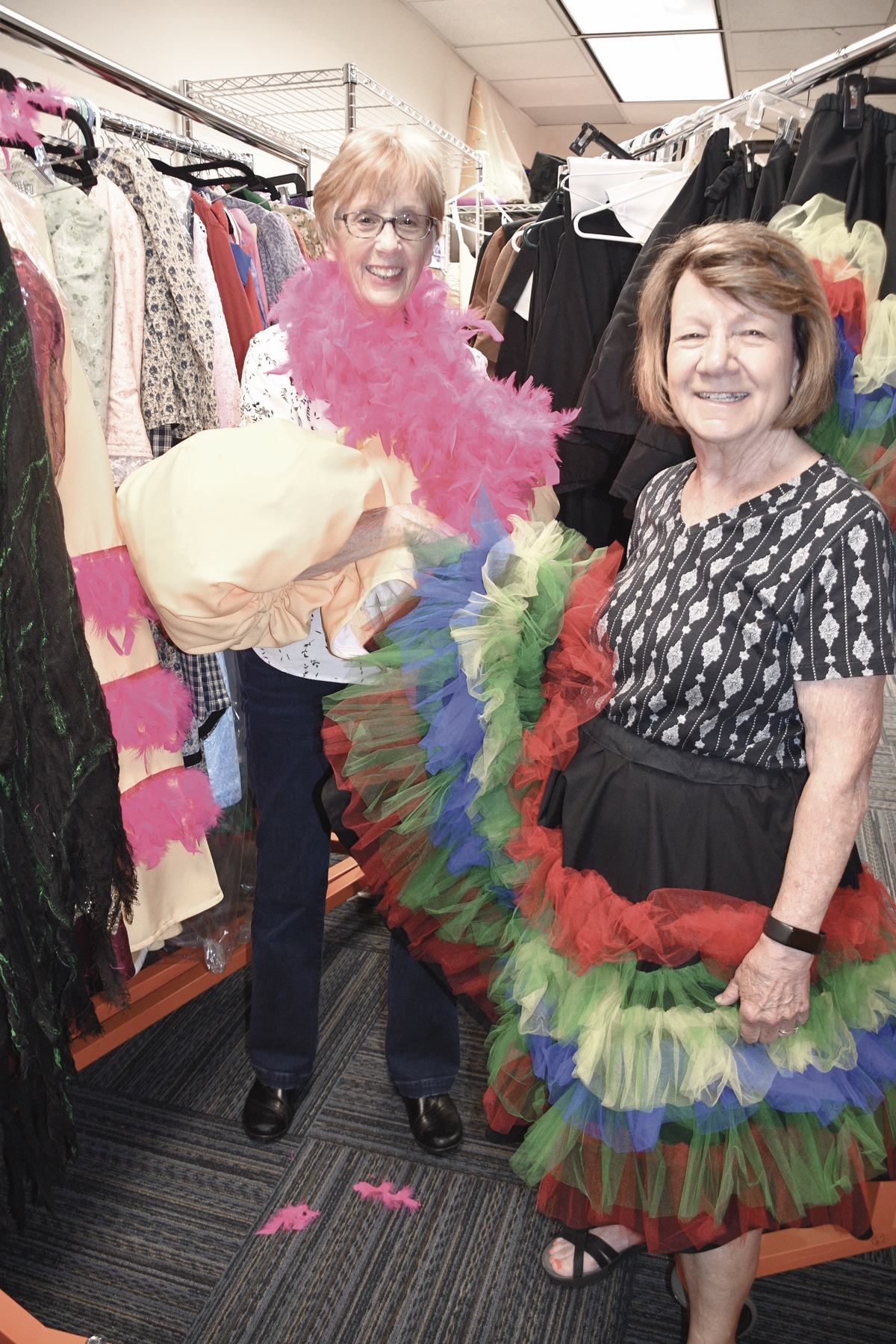
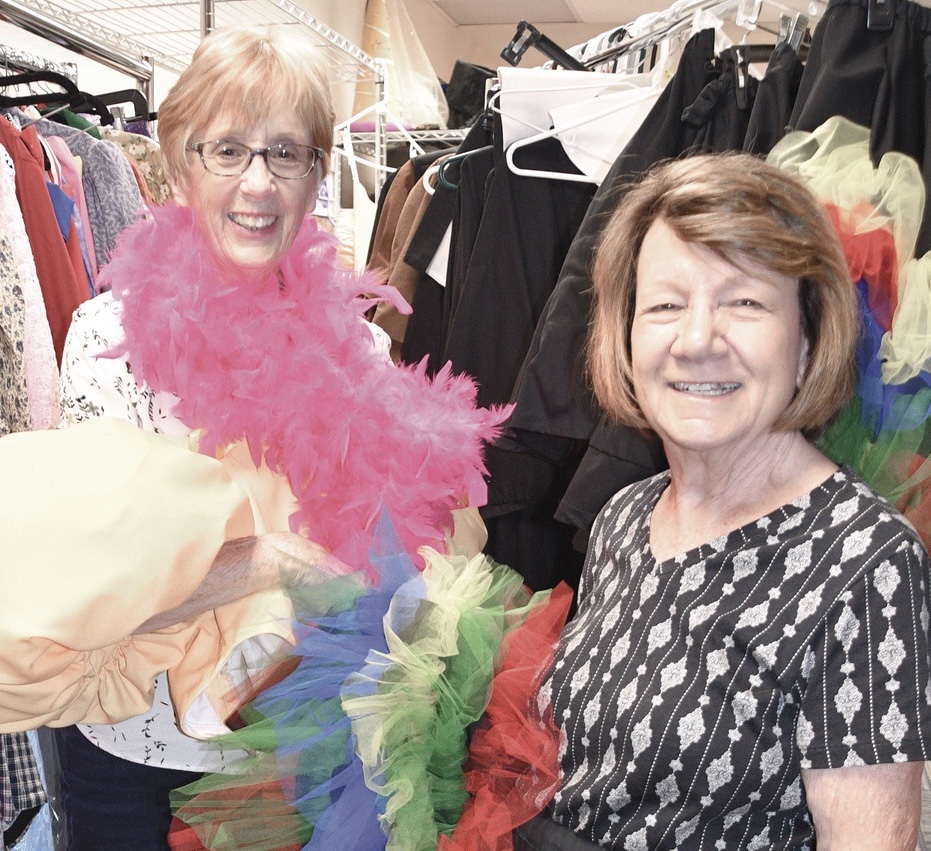
Meet the designing women Donna Scott (L) and Carol Burgett, who creat the costumes for the Sun City Theatre Company’s productions. Here they model some costume pieces off the rack. (Photo by Christine Such/My Sun Day News)
Scott said, “Costumes and sewing have been part of my life since the first Barbie came out in 1959. My mother said I was too old for Barbie, but my younger sister got one. My sister wasn’t interested in the doll, but I was. A friend of my mother gave me books of fabric swatches. I used these to create the best clothes a doll ever had.”
Scott earned a blue ribbon for a skirt she had made in 4H. In 8th grade, she made a three-piece suit.
“Creating costumes has been my real love. My first show with the Sun City Theatre Company was Brigadoon in 2009. I had one line, ‘She’s upstairs,’” she said.
On the playbill for Brigadoon, Scott was listed as a member of the costume committee. The Wizard of Oz was the first time Scott created costumes for a show. She made the costumes for Glinda and the Mayor of Munchkin City. For the performance of Beauty and the Beast, Scott was listed as a costume designer. This show was paused due to COVID.
Scott said, “Jeanne Pfotenhaur and I met and sat on a sidewalk on Del Webb Blvd to talk through costume ideas and plans.”
Burgett has assisted Scott for six years, “Carol is the organizer. She does the planning and the research for the costume. We try to reuse what we have, altering costumes to fit other roles. Sometimes it works, sometimes we have to start from scratch.”
Burgett said, “We moved here from Wisconsin at the end of 2019. I found out about the Theatre Company and that there were many behind-the-scenes activities, including costume work. I had learned how to sew from my mother when I was a teenager, but had not sewn for about 40 years. Luckily, I moved my old sewing machine when we moved here, so I went to the next Theatre Meeting and met Diane there. Then Covid happened, and the next show wasn’t until 2021. I started sewing just a few things for that show, Beauty and the Beast, and have continued since then. It’s a fun way to be involved, get to feel creative, and you meet so many nice people.”
Long before auditions even begin, Scott dives deep into historical research to establish the visual blueprint for the upcoming production of Cinderella. While entire wardrobes of ballgowns and peasant dresses are carefully selected and conceptualized for every single role in advance, the real work cannot begin until the show is cast. Once the actors are chosen, the costume shop springs into high gear. The team starts to carefully customize pieces to exact measurements, altering existing inventory from the racks, and sourcing raw materials to build new garments from scratch.
Burgett says, “We pay attention to the smallest details of the costume. For Fiddler on the Roof, we had to research the details of the prayer shawls and learn how to tie the knots properly. For that production, we made the Sabbath coats, the pants, and all of the women’s skirts, blouses, and headpieces.”
The costume shop also knows exactly how to surprise an audience. In a recent production of Nunsense, the nuns performed a flawless can-can dance that brought a roar of applause and appreciation from the crowd. As they kicked, they lifted their traditional black skirts to reveal a hidden rainbow of tulle underneath, adding a perfectly frivolous and joyful touch to the entire routine.
Cultivating this kind of theatrical magic for Cinderella requires an enormous amount of hands-on labor, and the costume shop is actively calling for reinforcements. The company wants community members to know that you do not need to be a master stitcher to get involved; volunteers do not even have to know how to sew.
Scott said, “We often need extra hands for simpler, yet critical, prep work. For instance, during the production of Hello, Dolly! Carol and I invited friends because we thought it would be fun to do some projects together. And it was. We cut fabric and stuffed dress bustles using ordinary plastic grocery bags to give the garments their historical shape. Whether you are wielding a pair of fabric scissors, packing a bustle, or arranging materials, every bit of help directly shapes the magic seen on stage.”
While the actors receive applause, these designers and stitchers work behind the scenes, armed with measuring tapes, needles, and extensive knowledge of the character. These are the unrecognized artisans whose technical ability and tireless labor bring the theater company’s visual world to life.
Anyone interested in helping get ready for the next production, Cinderella, can contact Scott at dianeolsenscott@gmail.com