
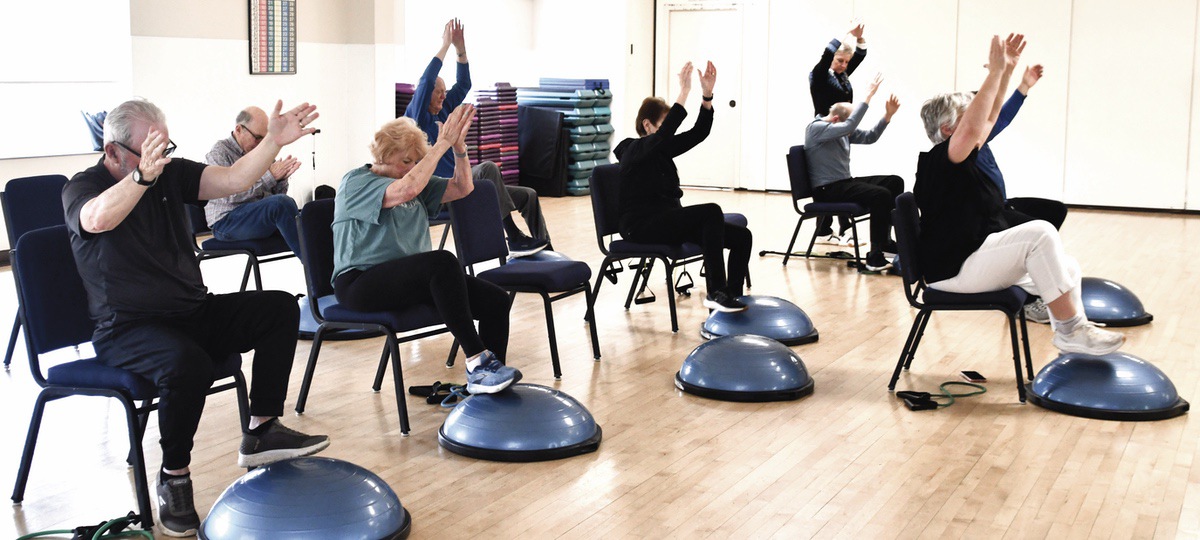
Sun City’s Fitness Department is filling a vital gap in local programming with its new Brain & Body fitness class. Led by Kelly Bertrand, Sun City Fitness Director, the session is every Wednesday at 1:30 p.m. in Studio A at Meadowview Lodge. The initiative sparked after a Kay Osborn and Marilyn Gustafson, Sun City residents, along with a local support group, noticed a lack of specialized resources for people navigating life after a stroke or living with Parkinson’s.
“There was a clear need for fitness tailored specifically to neurological challenges,” says Osborn, who helped advocate for the program.
After Osborn brought the idea to Bertrand, the initiative moved remarkably fast. “I made the suggestion just before Christmas, and by January, the classes were already running.” Bertrand didn’t just launch a program; she collaborated with the support group to ensure it genuinely served them. By attending their meetings, she was able to customize the schedule, including moving the class from Thursday to Wednesday, based specifically on member feedback.
As Osborn put it, “Kelly is great. She took the idea and ran with it.”
Bertrand emphasizes that this class is designed for individual success, allowing participants to move at their own pace with a variety of exercise options tailored to different abilities. By working within each person’s unique range of motion, the program targets improvements in balance, flexibility, strength, and cognitive health while simultaneously building confidence. Sessions begin with a chair-supported warm-up.
Bertrand said, “The chair remains nearby throughout the class, making sure it is available whenever extra support is needed.”
By design, these exercises are more than physical activity; they are brain hacks that stimulate neuroplasticity, the brain’s capacity to reorganize itself by creating new neural connections. Specifically, cross-body exercises involve coordinated motion across the midline of the body, such as touching the right hand to the left knee.
Bertrand said, “Every time a participant crosses their midline, they activate the thick bundle of nerves connecting the brain’s left and right hemispheres. Practicing regularly strengthens the brain’s pathways, allowing the two halves to talk to each other faster.”
Because the left brain controls the right side of the body, and the other way around, diagonal movements force both sides of your brain to work together. This helps improve focus, memory, and thinking skills, which are important for people with neurological conditions.
Bertrand said, “These movements help you relax right away by distracting your brain from pain or anxiety. Long-term, they help your body feel more grounded and stop you from feeling so mentally exhausted.”
Each class offers an encouraging setting in which participants use games and cognitive challenges to build the balance, strength, and confidence required for daily life.
Osborn said, “What is great is that Kelly introduces new exercises, changing it up, so it is not boring, and she adjusts to the needs of the participants.”
Bertrand said, “Caretakers are welcome to the classes. We want everyone to feel comfortable and, of course, more confident at the end of each class.”
Ultimately, this program is focused on empowering residents to regain control and improve their quality of life, one customized exercise at a time.